
Published by Vera, which makes product identity tags, certificates and software. Vera's own role is set out under 'Where Vera fits'.
This is for general information and is not legal advice.
5 min read
A handbag outlives its receipt, its box and often its first owner. What changes when the bag itself carries its record, from the day the tag goes in to every person who owns it next.
Listen to this article
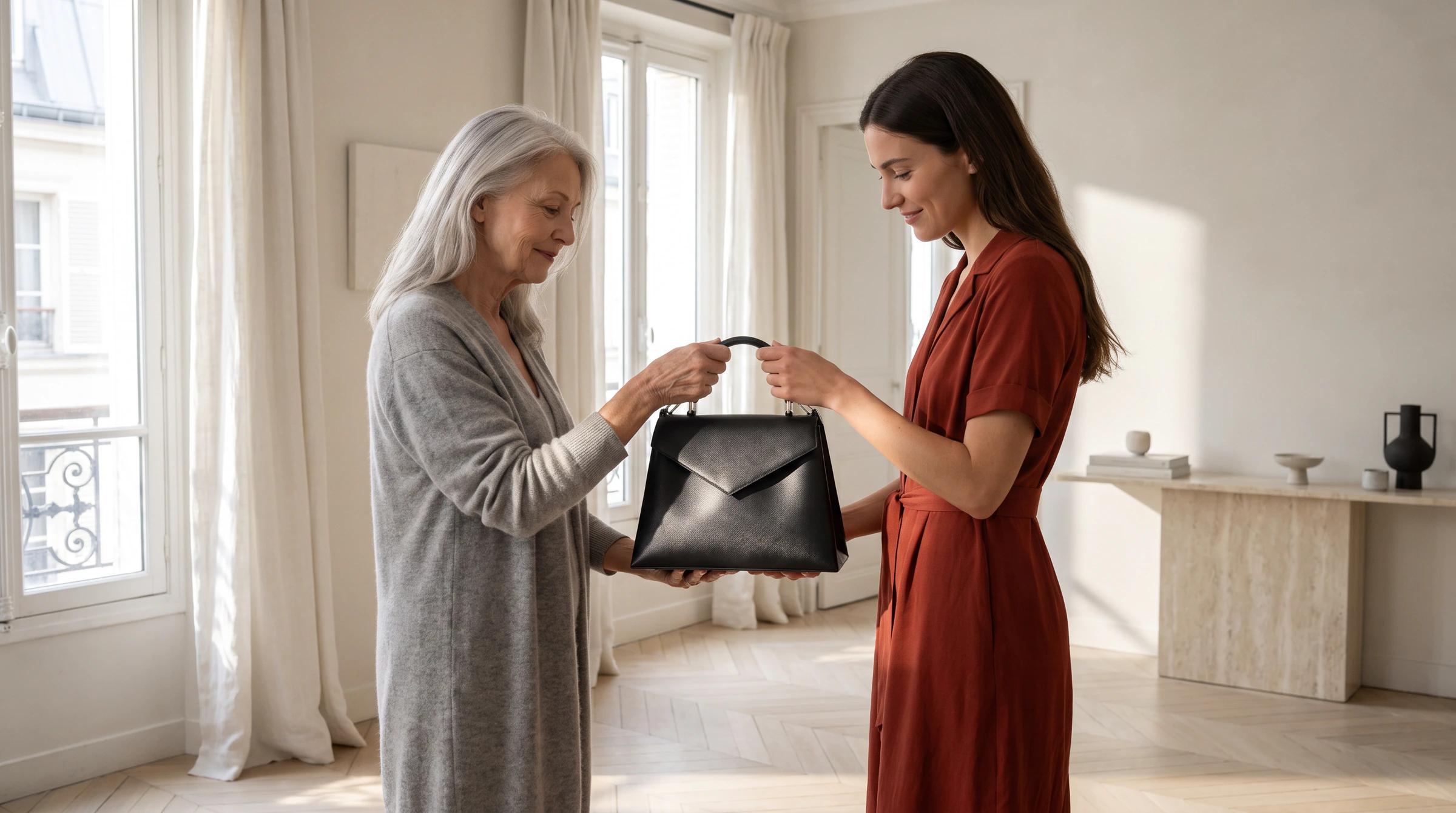
A well-made handbag has a longer life than almost anything else in a wardrobe. It is bought, carried for years, sometimes given away, often resold and occasionally handed down. Along the way it loses everything that once spoke for it: the receipt, the dust bag, the box, the card tucked into the inside pocket. By its third owner, a bag usually has nothing to say about itself except what it looks like.
That silence costs everyone something. A buyer on the secondhand market has to take a seller's word for it, or pay someone to inspect the stitching. The brand that made the bag loses sight of it the moment it leaves the boutique and never meets the people who own it next. And the owner, who may have chosen the bag for its story, holds an object that cannot tell it.
Product storytelling in luxury usually means campaigns: the atelier, the hands, the heritage. That story is real, but it belongs to the collection. The story of a single bag is smaller and more specific. Where and when this one was made. When it was first sold. Who has owned it since, if they choose to say. Whether it was ever reported lost. That record is what collectors look for and what resale prices rest on, and today it mostly lives in emails, screenshots and memory.
The practical version is simple. A small tag is sewn into the bag's label or lining when it is made, and behind the tag sits a digital certificate that belongs to that one bag. Anyone holding it can tap it with a phone. No app is needed: the certificate opens in the phone's own browser, in the brand's own logo and colours.
The tap is where trust starts. Each time the tag is read, it computes a fresh code with a key that cannot be read off the tag, so a verified tap is evidence about the bag in hand rather than about a web address. A link that has been copied, forwarded or screenshotted still opens the certificate, but without the verified state. A tap that replays an old code is recorded as invalid and shown on the certificate.
Comparison
Three ways to open a bag's certificate
A tap on the tag
What happens
The tag computes a fresh code with a key that cannot be read off it.
What it shows
Verified: evidence about the bag in hand.
A copied or forwarded link
What happens
The certificate opens from a web address, not from the bag.
What it shows
The certificate, without the verified state.
A replayed old code
What happens
The tap is recorded as invalid.
What it shows
The invalid tap, shown on the certificate.
A comparison of three ways a bag's certificate can be opened. A tap on the tag computes a fresh code with a key that cannot be read off the tag, so the certificate shows as verified: evidence about the bag in hand. A copied or forwarded link opens the certificate from a web address, not from the bag, so it shows without the verified state. A tap that replays an old code is recorded as invalid, and that invalid tap is shown on the certificate.
Because the tag is in the bag from the start, the story begins before the sale. Tags can arrive already bound to their products, so whoever fits the tag simply fits it. A sale can be recorded before the bag ships, and the buyer's first tap resolves the certificate to them.
The first sale is one chapter, not the ending. When an owner gives the bag away, they send the certificate on with a code, and once the recipient accepts, the ownership record changes hands. When the bag is resold through a verified channel, it travels with its record intact, so nobody has to authenticate it from scratch and the brand sees the sale.
Each owner decides whether their step appears in the bag's public history, and can change that decision later. Someone who wants to show a prospective buyer the record can send a named link and switch it off afterwards. If the bag goes missing, the owner can mark it lost or stolen, and that status shows the next time anyone taps it.
Over years, this adds up to what a secondhand buyer most wants and rarely gets: a continuous account of one object, kept with the object. Buyers say as much. Asked what they value in a digital product passport, the 7,800 Vestiaire Collective users surveyed by Boston Consulting Group (BCG) in 2025 put authentication and verification first: 70% named it when buying and 67% when selling, against 68% and 64% for detailed product specifications.1
Chart
Authentication is what buyers and sellers want most from a passport
% of respondents naming the feature
When buyingWhen selling
Authentication and verification
Detailed product specifications
A bar chart of the digital product passport features that the 7,800 Vestiaire Collective users BCG surveyed in 2025 value most. Authentication and verification: 70% when buying, 67% when selling. Detailed product specifications: 68% when buying, 64% when selling.
For handbag brand engagement, the change is that the brand stops losing the customer at the door. Many luxury relationships end at the till: BCG and Altagamma estimate that about 60% of a luxury brand's customer base are one-time buyers. A certificate keeps a line open after that purchase, and it reaches people the brand has never been able to see.2
Resale is the clearest case. In BCG and Vestiaire Collective's 2025 survey, 66% of respondents said resale had let them discover or buy a brand for the first time. Those are new customers who arrived through someone else's sale. When they tap the bag, they meet the brand directly, and a person who scans and leaves their details becomes a named lead, credited to the owner whose bag they scanned.3
In numbers
The customers a brand loses, and the ones resale brings
About 60%
of a luxury brand's customer base are one-time buyers.
BCG and Altagamma estimate
66%
of respondents said resale had let them discover or buy a brand for the first time.
BCG and Vestiaire Collective survey, 2025
Two figures. BCG and Altagamma estimate that about 60% of a luxury brand's customer base are one-time buyers. In BCG and Vestiaire Collective's 2025 survey, 66% of respondents said resale had let them discover or buy a brand for the first time.
Taps also show the brand where its bags actually are. Scans appear by country and location, with the rate of repeat and invalid scans for each country, so a bag turning up somewhere it was never sold is visible in the data rather than in a rumour.
For the owner, none of this should feel like technology. It should feel as though the bag remembers. A tap answers the question a buyer is too polite to ask. A gift arrives with its history. A bag sold after ten years leaves with proof of what it is. Expectations already point this way: in McKinsey's 2021 research, 72% of US consumers said they expect the businesses they buy from to recognise them as individuals.4
And the story does not depend on the hardware staying perfect. If a tag is damaged, it can be replaced, and the certificate moves to the new tag with its full history.
The most useful way to think about a designer bag's story is that it neither starts nor ends at the boutique. It starts when the tag goes in, passes through the first sale and continues through every owner who carries the bag after that. A brand that can follow that whole life knows more about its product, and about the people who love it, than one that only sees the first transaction.
Connections
Who a bag's record speaks to, once the bag can tell its story
A hub diagram with one bag's certificate at the centre, behind a tag sewn in when the bag is made. Around it, four people the record speaks to. The owner decides what appears in the bag's public history, can send a named link to a prospective buyer, and can mark the bag lost or stolen. A secondhand buyer taps the bag instead of taking a seller's word for it, and a verified tap is evidence about the bag in hand. The next owner receives the bag as a gift or through a verified resale, with its record intact. The brand sees the resale and where its bags are, and a person who scans the bag and leaves their details becomes a named lead.
That is the idea behind Vera: one tag and one certificate for the life of each product, so the object can speak for itself to whoever holds it next. The record starts when the tag goes in and the certificate is created, and it stays with the bag through every owner after. For most brands the tag goes in at manufacture, and the certificate can be activated wherever that delivers the most value, such as at the sale or in store. For auction houses and memorabilia, it starts at authentication, when experts verify the item is real.
Process
One bag, one record, from the tag on
The tag goes in
Sewn in, already bound to this bag.
The first sale
Recorded before the bag ships; the buyer's first tap makes it theirs.
A gift or a resale
The certificate is sent on with a code; ownership moves with it.
Every owner after
Each decides what is public. A lost or stolen bag says so.
A four-step process for one bag's record. First the tag goes in, sewn in and already bound to this bag. At the first sale, the sale is recorded before the bag ships and the buyer's first tap resolves the certificate to them. At a gift or a resale, the owner sends the certificate on with a code, and once the new owner accepts, the bag's ownership moves with the certificate, its record intact. For every owner after, each owner decides whether their step is public, and a bag marked lost or stolen shows that status the next time anyone taps it.
Published by Vera, which makes product identity tags, certificates and software. Vera's own role is set out under 'Where Vera fits'.
This is for general information and is not legal advice.
New articles, interviews and product news from Vera.
Unsubscribe any time. We never share your email.
Perspective, 7 min read
Explainer, 9 min read
Explainer, 7 min read