
Published by Vera, which makes product identity tags, certificates and software. Vera's own role is set out under 'Where Vera fits'.
This is for general information and is not legal advice.
7 min read
When a bag or a watch resells, the platform takes a cut and the brand usually takes nothing. Why there is no resale royalty for brands, what art and NFTs show, and how brands earn from resale anyway.
Listen to this article
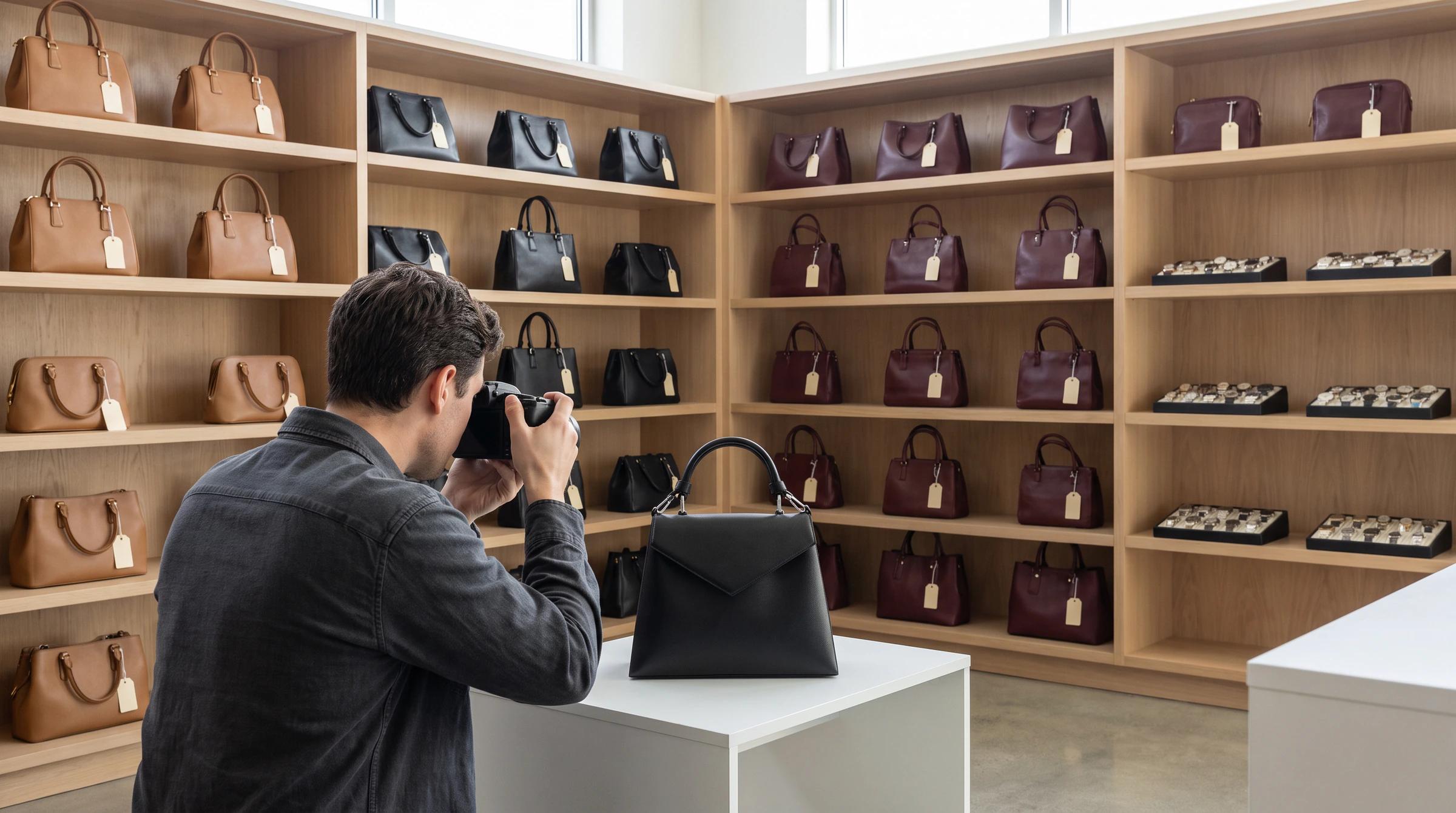
When a handbag or a watch resells, someone takes a cut. On a consignment site it is the platform. On an open marketplace it is the marketplace and the payment processor. The party that almost never shares in the sale is the house that made the object, even though its name is most of what the buyer is paying for.
That gap keeps getting larger. Boston Consulting Group (BCG) and Vestiaire Collective reported in 2025 that the secondhand fashion and luxury market is growing three times faster than the firsthand market, and expect global resale to reach as much as $360 billion by 2030. So brands ask a reasonable question. Is there such a thing as a resale royalty for a brand, and if not, how does a brand earn any secondary market revenue at all?1,2
Seen from the brand's side, resale platforms fall into a few types, and each keeps a different share. Consignment platforms take the item in, authenticate it and sell it on the owner's behalf. The service is the expensive part, and so is the cut. The RealReal, whose marketplace recorded $2.13 billion in gross merchandise value in 2025, reports that it retained 37.7% of the proceeds from consigned goods that year, the figure it calls its take rate.3
Open marketplaces let owners list and ship items themselves, and charge less. As of October 2026, eBay's final value fee on women's handbags is 15% when the sale totals $2,000 or less and 9% when it totals more. On watches it is 15% of the first $1,000, 6.5% of the portion up to $7,500 and 3% of anything above that, plus a small fee per order.4
Around them sit specialist marketplaces for single categories, such as watches or sneakers, and the private sale: a message, a meeting and a bank transfer, with no platform at all. Private sales cost the least and leave the least behind. Nothing is authenticated on record, and nothing tells the next buyer what happened.
Across every one of these, the brand's share is the same, which is nothing. That is not an oversight by the platforms. It is how the law treats goods once they have been sold.
In numbers
Who keeps what when a handbag resells
The RealReal, consignmentIts take rate on consigned goods, 2025
37.7%
eBay, a women's handbag at $2,000 or lessFinal value fee, as of October 2026
15%
eBay, a women's handbag over $2,000Final value fee, as of October 2026
9%
The brand that made itOn any of these sales
Nothing
A bar chart of the share of a resale each party keeps. The RealReal retained 37.7% of the proceeds from consigned goods in 2025, its take rate. As of October 2026, eBay's final value fee on a women's handbag is 15% when the sale totals $2,000 or less and 9% when it totals more, plus a small fee per order. The brand that made the bag keeps nothing on any of these sales.
Once a brand sells a genuine product, it gives up control over what happens to that product next. In the US this is the first sale doctrine; in the Ninth Circuit's words, a producer's right to control the distribution of its trademarked product does not extend beyond the first sale. In the EU, the trade mark regulation says a mark does not let its owner prohibit use in relation to goods it has put on the market in the European Economic Area, unless there are legitimate reasons, such as the goods having been changed or impaired.5,6
In practice, a brand has no right to levy a fee on an owner who sells a genuine bag or watch, and no way to collect one if it tried. Whatever share of resale value a brand earns has to come from an agreement with someone involved in the sale, usually the platform, or from running the sale itself.
There is one well-established resale royalty, and it is worth understanding because it shows what such a right takes. The EU's 2001 resale right directive, known as droit de suite, gives the author of an original work of art a percentage each time the work resells through an art market professional such as an auction house, gallery or dealer. The rate falls as the price rises, from 4% on the first €50,000 to 0.25% above €500,000. The total per sale is capped at €12,500, the seller pays it, and each member state sets a minimum price that may not exceed €3,000.7
The UK keeps the same structure in sterling. Since 1 April 2024, its Artist's Resale Right applies to sales of £1,000 or more, with the same bands and a £12,500 cap, and two collecting societies, the Design and Artists Copyright Society (DACS) and the Artists' Collecting Society (ACS), collect and distribute it. The United States has no equivalent; the Copyright Office notes that a resale royalty is not part of current US copyright law.8,9
Comparison
The artist's resale right in the EU, the UK and the US
EU, the 2001 directive (droit de suite)
Rate
From 4% on the first €50,000, falling to 0.25% above €500,000
Cap per sale
€12,500
Applies from
A minimum price set by each member state, at most €3,000
Paid and collected
Paid by the seller
UK, Artist's Resale Right
Rate
The same bands as the EU
Cap per sale
£12,500
Applies from
Sales of £1,000 or more, since 1 April 2024
Paid and collected
Collected and distributed by DACS and ACS
US
No equivalent. A resale royalty is not part of current US copyright law.
A comparison of the artist's resale right in three places. In the EU, under the 2001 directive known as droit de suite, the rate falls from 4% on the first €50,000 to 0.25% above €500,000, the total per sale is capped at €12,500, each member state sets a minimum price of at most €3,000, and the seller pays. In the UK, the Artist's Resale Right uses the same bands with a £12,500 cap, applies to sales of £1,000 or more since 1 April 2024, and is collected and distributed by DACS and ACS. The US has no equivalent: a resale royalty is not part of current US copyright law.
Three lessons carry over to products. The right exists only because a law created it. It works only where a professional intermediary handles the sale and reports it. And sales between private individuals fall outside it entirely. A royalty needs a point in the sale where someone can see it and collect.
Non-fungible tokens (NFTs) promised to remove that last condition by writing the royalty into the asset itself. The record is instructive. ERC-2981 (Ethereum Request for Comment 2981), the Ethereum royalty standard, lets a token state the royalty it expects, but says the payment must be voluntary, because a transfer between wallets does not always mean a sale took place. In August 2023, OpenSea announced it would make creator fees optional and switch off the tool that had enforced them.10,11
A royalty written into a token turned out to be a request. Whether it was paid depended on the marketplace, which is the same dependency the art market has, without a law standing behind it.
Without a right to a royalty, brands have found commercial routes into resale value instead. BCG and Vestiaire Collective describe two main models: brands running resale through their own sites or stores, and brands partnering with resale platforms through resale-as-a-service programmes that sell authenticated pre-owned items on co-branded pages.1
Marketplace partnerships are the lightest version. In October 2020, The RealReal and Gucci opened a dedicated online shop of pre-owned Gucci pieces. In February 2021, Alexander McQueen became the first house in Vestiaire Collective's Brand Approved programme: clients sold pieces back, McQueen authenticated them, and the clients received a credit note to spend in McQueen stores. That credit is the brand's share, taken as a future first-hand sale rather than as a fee.12,13
The fullest version is owned resale. Richemont bought the pre-owned watch specialist Watchfinder in 2018. In December 2022, Rolex launched its Certified Pre-Owned programme, through which official retailers sell second-hand Rolex watches at least three years old, certified as authentic and sold with a two-year warranty. Owned resale gives a brand the whole margin and the customer, and also the burdens BCG says have made it hard for some brands to run alone: liquidity, operational complexity, inventory management and access to resale-focused customers.14,15,1
Timeline
How brands moved into resale, 2018 to 2022
Richemont buys Watchfinder (owned resale)
2018.
The RealReal and Gucci open a shop of pre-owned Gucci (partnership)
October 2020.
Alexander McQueen joins Vestiaire Collective's Brand Approved (partnership)
February 2021.
Rolex launches Certified Pre-Owned (owned resale)
December 2022.
A timeline from 2018 to 2022 of four brand moves into resale. Richemont bought the pre-owned watch specialist Watchfinder in 2018, owned resale. The RealReal and Gucci opened a dedicated online shop of pre-owned Gucci pieces in October 2020, a partnership. Alexander McQueen became the first house in Vestiaire Collective's Brand Approved programme in February 2021, a partnership. Rolex launched its Certified Pre-Owned programme in December 2022, owned resale.
Resale-as-a-service sits in between, with a platform running the operation under the brand's name. BCG's example is Chloé with Vestiaire Collective, where items carry a digital product passport and sellers can take brand credit, platform credit or make a donation, a programme the report says cut resale time by over 60%.1
Framework
How brands share in resale: who owns the operation, and whose name it carries
Who owns the operation: A resale platformWhose name the sale carries: The brand's
Resale-as-a-service
A platform runs it under the brand's name: Chloé with Vestiaire Collective, which cut resale time by over 60%, BCG reports.
Who owns the operation: The brand or its groupWhose name the sale carries: The brand's
Owned resale, under the brand's name
Rolex Certified Pre-Owned (December 2022), sold by official retailers. The whole margin and the customer, and the burdens of running it.
Who owns the operation: A resale platformWhose name the sale carries: The platform's
Marketplace partnership
A shop or programme on the platform: The RealReal and Gucci (October 2020); Alexander McQueen in Brand Approved (February 2021), paid as a credit note.
Who owns the operation: The brand or its groupWhose name the sale carries: The platform's
Owned resale, through a specialist
Richemont bought the pre-owned watch specialist Watchfinder in 2018, which keeps its own name.
Who owns the operation
A two-by-two framework of the ways brands share in resale, by who owns the operation (a resale platform, or the brand or its group) and whose name the sale carries (the platform's, or the brand's). A marketplace partnership is owned by the platform and carries its name: The RealReal's shop of pre-owned Gucci from October 2020, and Alexander McQueen in Vestiaire Collective's Brand Approved from February 2021, where clients were paid in McQueen credit notes. Resale-as-a-service is run by a platform under the brand's name, as with Chloé and Vestiaire Collective, which BCG reports cut resale time by over 60%. Owned resale under the brand's name is Rolex Certified Pre-Owned, launched in December 2022 and sold by official retailers, which gives the brand the whole margin and the customer, and the burdens of running it. Owned resale through a specialist is Richemont's purchase of Watchfinder in 2018, which keeps its own name. The routes run from lightest, a platform owning the operation under its own name, to fullest, the brand owning it under the brand's name.
BCG's report makes the forward case directly. When resale runs through platform partnerships, it argues, digital product passports could generate incremental revenue by turning each verified secondhand transaction into a royalty opportunity for the brand. Bain and eBay have modelled the size of the wider prize: a passport could double a fashion item's lifetime value through resale and services, with up to 65% of the gain going to consumers.1,16
Read alongside the art market's experience, that points to three preconditions, none of which is a new law.
The word verified carries the most weight in BCG's sentence. A platform will share revenue on a sale it can show involved the brand's genuine product, and a brand will only stand behind a resale it can check.
Layers
What a royalty for brands would rest on
A partner at the point of sale
The share is agreed with whoever runs the sale: a platform, a retailer or the brand's own channel. It is never imposed on the owner.
A record of the change of hands
Someone knows the item sold, and when, without relying on the seller to report it.
Item-level identity
The object is identifiable as itself, not just as a style number.
Top: Where the share is agreed. Bottom: What it rests on.
A stack of three preconditions for a brand's share of resale, read from the top. At the top, a partner at the point of sale: the share is agreed with whoever runs the sale, whether a platform, a retailer or the brand's own channel, and it is never imposed on the owner. Under it, a record of the change of hands: someone knows that the item sold, and when, without relying on the seller to report it. At the foundation, item-level identity: the object is identifiable as itself, not just as a style number. Each rests on the one below, because a platform will share revenue on a sale it can show involved the brand's genuine product. None of the three is a new law.
By design, Vera keeps each resale on the brand's own record: the sale completes inside the item's certificate, so the money and the ownership move together. What Vera provides is the groundwork those preconditions describe. Each product carries a Vera tag fitted when it is made, sewn into a garment's label, hidden behind a handbag's logo or placed inside a watch behind the dial. Behind the tag sits a certificate that belongs to that one item.
Each tap computes a fresh code with a key that cannot be read off the tag, so a verified tap is evidence about the item in hand. When an owner sells, they can list the item and complete the sale inside its certificate, so the money and the ownership record move together, and the resale lands on the same record as every earlier transfer and scan. The brand sees where its products change hands, and a buyer who taps the item meets the brand directly.
How a brand turns that into revenue, whether through a partnership, a trade-in credit or its own certified pre-owned channel, is a commercial decision between the brand and the people it works with. The record makes that conversation possible. It does not set the terms.
Published by Vera, which makes product identity tags, certificates and software. Vera's own role is set out under 'Where Vera fits'.
This is for general information and is not legal advice.
New articles, interviews and product news from Vera.
Unsubscribe any time. We never share your email.

Perspective, 6 min read

Explainer, 8 min read

Perspective, 5 min read